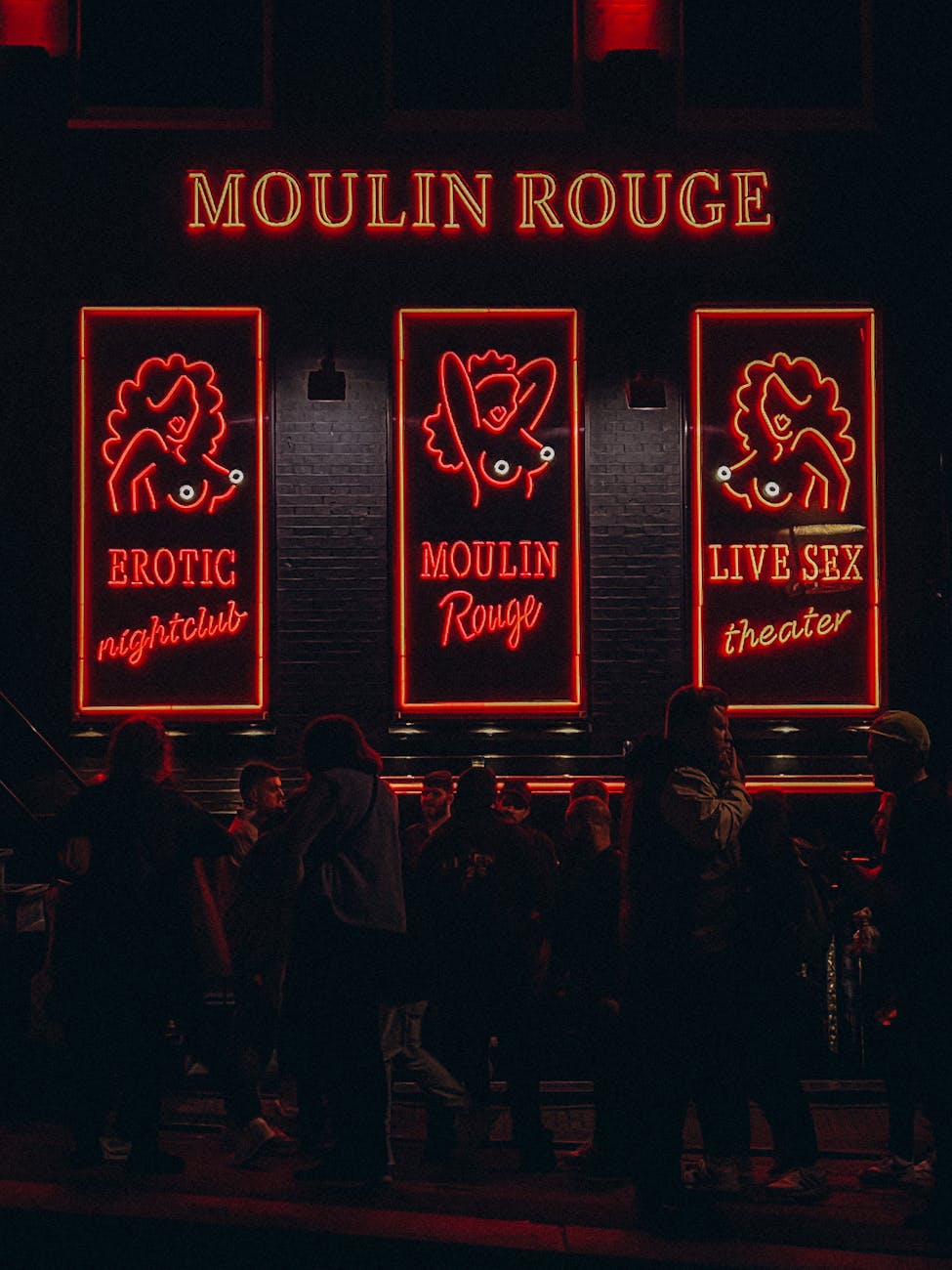
The Labyrinth of Desire: Unpacking the Amsterdam Red Light District
As night descends upon the Amsterdam Red Light District, De Wallen transforms into a realm of captivating contradictions. The thick scent of canal water wafts through the air, entwining itself with the sweet aroma of cigarette smoke and the distant tang of cannabis. The dark ripples of the Oudezijds Voorburgwal, a centuries-old canal, reflect the vibrant glow of red neon lights that illuminate the narrow alleyways. The rhythmic click of heels on worn cobblestones serves as a constant reminder of the district’s enduring allure.
Amsterdam Red Light District 2026: Quick Visitor Guide
| Quick Info | Details for 2026 |
|---|---|
| 🕒 Opening Hours | Windows: 12:00 PM – 01:00 AM (Sun-Thu) | 02:00 AM (Fri-Sat) Coffeeshops: Until 01:00 AM daily |
| 📷 Photography | Strictly Forbidden. Police & hosts monitor actively. Fines exceed €150. |
| 🍺 Public Alcohol | Prohibited on the streets. Only allowed inside licensed bars. |
| 📍 Best Entry Point | Damrak via Beursplein (5-min walk from Centraal Station). |
Amidst this kaleidoscope of sensory stimuli, one’s gaze is drawn to the majestic Oude Kerk (Old Church), its imposing presence seeming almost incongruous amidst the row of windows that line the streets. This 14th-century Gothic church, with its sturdy stone façade and elegant spire, stands as a testament to the city’s rich history and spiritual heritage. The visual paradox is striking – a revered house of worship nestled within an area renowned for its unbridled hedonism.
Historical Layers: The Pragmatism of the Dutch Golden Age
To comprehend the complexities of De Wallen, one must delve into Amsterdam’s storied past. The city’s emergence as a major commercial hub during the Dutch Golden Age (17th-18th centuries) played a significant role in shaping its attitude toward vice and tolerance. The Dutch East India Company, a behemoth of maritime trade, brought unprecedented wealth and cultural exchange to the city. This influx of people, goods, and ideas created an environment where pragmatism and economic expediency took precedence over moral strictures.
The concept of ‘Gedoogbeleid’ (Tolerance) – often misattributed as a modern liberal innovation – has its roots in this era. City authorities, recognizing the inevitability of prostitution and other vices, opted for a policy of containment rather than outright prohibition. By regulating and taxing these activities, they aimed to maintain social order while harnessing the economic benefits that came with them. This approach allowed Amsterdam to flourish as a cosmopolitan center, where diverse influences blended and business thrived.
As historian Lotte van de Pol noted, “The authorities in Amsterdam… were not interested in eradicating prostitution altogether, but rather in creating an environment in which it could be practiced with the least possible disturbance to public order.”
The 2026 Pivot: A City in Flux
Fast-forward to the present day, and De Wallen finds itself at a crossroads. The ‘Stay Away’ campaign, launched by local authorities in recent years, has led to a noticeable decrease in visitor numbers. The introduction of 1 AM closing times for bars and clubs, coupled with booze bans in certain areas, aims to reduce rowdiness and curb the neighborhood’s reputation as a party destination.
Yet, this shift in policy is only part of a larger struggle. As Amsterdam grapples with its own fame, De Wallen remains an integral – if contentious – component of the city’s identity. The neighborhood’s ‘backstage’ reputation, built over centuries, continues to attract millions of visitors each year. This dichotomy has created a psychological tension within the city: how to reconcile the desire for evolution and respectability with the weight of its own notorious fame?
Amsterdam’s 14th-century core is now caught between preserving its cultural heritage and adapting to modern sensibilities. The city’s residents, policymakers, and business owners are engaged in a delicate balancing act – one that seeks to redefine De Wallen’s place within Amsterdam’s urban fabric without sacrificing the essence of this unique district.
As we delve deeper into the labyrinthine world of De Wallen, it becomes clear that this is not simply a story about prostitution or vice. It is an exploration of human desire, the blurred lines between public and private spaces, and the resilience of a city in constant flux.
The Amsterdam Red Light District is a microcosm of the city’s eternal conundrum: how to balance freedom with responsibility, permissiveness with control, and heritage with progress. As we navigate this complex landscape, one question lingers – what does the future hold for De Wallen, and by extension, for the city itself?
Behind the Glass: The Human Story
As we wander through De Wallen’s narrow alleys, it’s easy to get caught up in the spectacle of the red lights and the allure of the unknown. But behind each window, there’s a human being with a story to tell. They are the backbone of the district, yet often remain invisible to the naked eye.
The ‘RED’ union, founded by and for sex workers, has been fighting tirelessly to protect their rights and interests in De Wallen. Their efforts focus on promoting fair labor conditions, advocating for safer working environments, and pushing back against gentrification. As we gaze upon the windows, it’s essential to acknowledge the individuals behind them, who are not mere objects of desire but complex human beings with agency and autonomy.
The ‘gaze’ of the tourist can be a heavy burden to bear. Imagine being watched by countless strangers every day, your body scrutinized and commodified. It raises important questions about the ethics of visiting De Wallen as a spectator versus a participant. While some argue that paying for sex is a form of empowerment, others claim it perpetuates exploitation. As we navigate this complex issue, it’s crucial to prioritize empathy and understanding over judgment.
The Invisible Workers
Despite being one of the most visible districts in Amsterdam, De Wallen’s workers often feel invisible. They are the ones who keep the lights on, the music playing, and the atmosphere electric. Yet, they remain hidden from view, their stories and struggles overlooked by the very people who come to gawk at the windows.
As we peel back the layers of De Wallen’s onion-like structure, we begin to uncover the intricate web of lives that intersect within the district. There are the sex workers, of course, but also the cleaners, security guards, and café owners who keep the wheels turning. Each one has a unique perspective on the district, shaped by their experiences and interactions with visitors.
The Erotic Centre Conflict
Mayor Femke Halsema’s proposal to relocate De Wallen’s windows to Europaboulevard has sparked heated debate among locals. The plan, designed to reduce congestion and improve working conditions, is seen as an ‘amputation’ of history by many. For some, the very essence of De Wallen lies in its organic growth, a labyrinthine landscape that has evolved over centuries.
In contrast, the sleek, sterile vision of the new proposed centre feels soulless, devoid of the character and charm that makes De Wallen so unique. The NIMBY (Not In My Backyard) protests in the Zuid district have highlighted concerns about noise pollution, increased foot traffic, and the erosion of local identity.
For those who call De Wallen home, the prospect of uprooting their lives and livelihoods is daunting. What happens to the sex workers, café owners, and other entrepreneurs who have built their businesses around the district’s existing infrastructure? The uncertainty surrounding this proposal has created an atmosphere of anxiety, with many fearing for the future of a place they love.
A Gentrification Story
De Wallen’s story is one of gentrification, where the influx of tourists and investment threatens to displace long-time residents and businesses. As the district becomes more polished and commercialized, it risks losing its raw, unbridled energy – the very thing that draws people in.
Culture Beyond the Red Lights
Just a stone’s throw from De Wallen lies the Zeedijk, Amsterdam’s historic LGBTQ+ hub. This charming neighborhood is home to some of the city’s most iconic gay bars and clubs, including Cafe ‘t Mandje – the world’s oldest gay bar.
Established in 1927, Cafe ‘t Mandje has been a beacon for the LGBTQ+ community, providing a safe space for self-expression and connection. Its significance extends beyond its status as a watering hole; it represents a triumph of inclusivity and acceptance in a city that prides itself on being a haven for marginalized voices.
As we explore De Wallen’s lesser-known corners, we stumble upon hidden gems like the district’s jazz clubs, where musicians weave magic with every note. These intimate spaces offer a respite from the intensity of the red lights, inviting visitors to experience the area in a new light.
The Hidden Life
Despite the pressure of mass tourism, De Wallen continues to thrive as a hub for creative expression and alternative culture. Behind the façade of souvenir shops and tourist traps lies a vibrant ecosystem of artists, musicians, and performers who call the district home.
As night falls, the streets come alive with impromptu performances, from fire-breathers to living statues. The air is electric, filled with an energy that’s equal parts rebellious and alluring. In these moments, we catch a glimpse of De Wallen’s true essence – a place where creativity knows no bounds and freedom is not just a concept but a way of life.
The Architecture of Tolerance: A 14th-Century Labyrinth
The Enigmatic Gables of De Wallen
As one navigates the narrow, winding alleys of De Wallen, it becomes apparent that the architecture itself plays a significant role in shaping the neighborhood’s unique atmosphere. The iconic gables, with their ornate facades and subtle symbolism, are more than just aesthetically pleasing – they also serve as testaments to the district’s rich history and cultural identity. The most striking aspect of De Wallen’s architecture is the prevalence of stepped gables, a style that originated in the 14th century. These triangular facades, often adorned with intricate carvings and ornate decorations, seem to lean inward, as if sharing a secret. This design choice was not merely aesthetic; it also served a practical purpose. The stepped gable allowed for more interior space while minimizing the building’s footprint, making it an ideal solution for the densely populated neighborhood.
Huis aan de Drie Grachten: A Beacon of Secrecy and Visibility
One notable example of De Wallen’s enigmatic architecture is the Huis aan de Drie Grachten (House on the Three Canals). This 17th-century building, situated at the intersection of three major canals, appears unassuming at first glance. However, its facade conceals a fascinating history. The house was originally built as a warehouse for the Dutch East India Company, and its unique location allowed for easy access to the city’s main waterways. As one approaches the Huis aan de Drie Grachten, it becomes clear that the building’s design is a masterclass in subtlety. The stepped gable, adorned with a carved wooden facade, seems to blend seamlessly into the surrounding architecture. Yet, upon closer inspection, the intricate carvings reveal themselves to be cleverly disguised symbols, hinting at the building’s true purpose as a hub for clandestine activities.
Unveiling the Secrets of Oude Kerk
Beneath the imposing structure of Oude Kerk (Old Church) lies a labyrinthine network of foundations, hidden from prying eyes. As one delves into the church’s history, it becomes apparent that its stones hold secrets and stories waiting to be uncovered. Founded in 1213, Oude Kerk has witnessed the rise and fall of empires, the ebb and flow of trade, and the evolution of a city’s identity. As we delve deeper into its foundations, we discover a rich tapestry of history, where the sacred and the profane coexist.
The Foundations: A Sacred Burial Ground
The church’s foundation is rooted in a cemetery for sailors and traders who met their demise on the high seas. The original wooden structure was replaced by a stone building in 1300, marking the beginning of Oude Kerk’s transformation into a majestic Gothic temple. As the city’s wealth grew, so did the church, with additions and renovations that reflected the prosperity of Amsterdam’s merchants.
The Graves of the Rich Merchants
Beneath the floor of Oude Kerk lie the remains of some of Amsterdam’s most influential citizens. The graves of wealthy merchants, such as Dirck Jacobsz, who traded in spices and textiles, are a testament to the city’s commercial prowess. These burials demonstrate the church’s role as a symbol of status, where the elite could showcase their wealth and power.
The ‘Iron Chapel’: Keeper of City Charters
In the heart of Oude Kerk lies the ‘Iron Chapel’, a small, ornate room that once served as a repository for Amsterdam’s most prized possessions: its city charters. These documents, granted by the Holy Roman Emperor, secured Amsterdam’s autonomy and trade privileges. The chapel’s iron grille and intricate lockwork ensured the safekeeping of these valuable papers, safeguarding the city’s very identity.
The Green Paradox: Coffee Shops in the 2026 Landscape
As we navigate the winding streets of De Wallen, we encounter a paradox – the coffee shops that once defined this neighborhood are evolving. The ‘I-criterion’, introduced to combat organized crime and reduce nuisance, has led to a seismic shift in the landscape.
From Coffee Shops to Social Clubs
Gone are the days of hazy cafes filled with tourists seeking a quick fix. In their place, we find sophisticated social clubs that cater to a more discerning clientele. These establishments have adapted to the changing regulatory environment by focusing on quality and community. Members-only lounges, offering artisanal cannabis and gourmet coffee, now dominate the scene.
Adaptation of Icons: The Bulldog’s Evolution
The Bulldog, an Amsterdam institution since 1975, exemplifies this transformation. Once a hub for backpackers and thrill-seekers, it has evolved into a refined social club, offering exclusive strains and expertly crafted coffee cocktails. This shift reflects the changing attitudes of both locals and visitors, who now prioritize quality over quantity.
Sociological Shift in Cannabis Consumption
The 2026 landscape reveals a significant sociological shift in cannabis consumption. Gone are the stoner stereotypes; instead, we find a more nuanced and educated approach to recreational use. Consumers now prioritize strains with specific effects, from relaxation to creativity enhancement. This evolution is mirrored in the coffee shops themselves, which have become hubs for like-minded individuals seeking a sophisticated experience.
Navigating De Wallen in 2026: A Social Contract of Respect
As we delve deeper into the labyrinthine streets of De Wallen, it’s essential to acknowledge the unspoken rules that govern this unique ecosystem. The freedom and creativity that permeate every corner of the Red Light District come with a price – respect for those who call this place home.
The Unspoken Rules
As a local guide, I’ve witnessed countless visitors unknowingly disrupt the delicate balance of De Wallen’s social contract. To avoid unintentionally offending the residents and sex workers, it’s crucial to understand the following guidelines:
- Respect the red lights: Avoid taking pictures or videos in front of the windows, as this is a clear invasion of the sex workers’ privacy.
- Maintain a safe distance: Keep a respectful distance from the windows and doorways to avoid crowding the narrow streets and disrupting business.
- Be mindful of noise levels: De Wallen may be known for its vibrant atmosphere, but loud groups can quickly become a nuisance. Be considerate of those living and working in the area.
The Photography Ban: A Matter of Safety and Privacy
In 2026, Amsterdam implemented a city-wide ban on photography in the Red Light District. While some may view this as an overreach, it’s essential to understand the reasoning behind this decision. Sex workers have long been vulnerable to harassment, stalking, and exploitation – with photography being a primary enabler of these crimes.
The photography ban is not merely a law; it’s a necessary measure to protect the safety and privacy of those working in De Wallen. By respecting this rule, visitors can help create a safer environment for everyone involved.
Survival & Safety: Navigating De Wallen’s Challenges
Beyond the unspoken rules and photography ban, there are other challenges that visitors should be aware of when navigating De Wallen:
- Fake drugs: Be cautious of rogue street dealers peddling counterfeit substances. These can be hazardous to your health and even life-threatening.
- Tourist traps: Steer clear of overpriced bars and clubs, which often prey on unsuspecting tourists. Instead, opt for authentic brown cafes, where you can experience the real De Wallen atmosphere without breaking the bank.
The Mirror in the Water: Expert Insight
“The shift from ‘Mass Tourism’ to ‘Managed Experience’ is a crucial one. Cities like Amsterdam are no longer content with simply catering to the whims of visitors; they’re taking proactive steps to ensure that tourism benefits both locals and tourists alike. In De Wallen, this means striking a balance between preserving the area’s unique character and protecting its most vulnerable residents. By implementing measures like the photography ban and increasing community engagement, Amsterdam is paving the way for a more sustainable, responsible approach to urban tourism.”
– Dr. Maria Hernandez, Urban Tourism Expert
Then & Now: A Comparison of De Wallen in 2019 vs 2026
| Factor | De Wallen in 2019 | De Wallen in 2026 |
|---|---|---|
| Closing Times | Bars/clubs: 3-4 am; Coffee shops: 1 am | Bars/clubs: 2 am; Coffee shops: Midnight |
| Cannabis Rules | Coffee shops regular sales; street use common | No street consumption; stricter zoning in center |
| Street Drinking | Allowed in designated areas | Prohibited throughout the district |
| Atmosphere | Lively, but sometimes chaotic/rowdy | Subdued, focused on community and heritage |
| Crowds | Tourist-heavy stag parties common | Smaller, diverse crowds; more local presence |
As De Wallen continues to evolve, it’s clear that the city is prioritizing a more nuanced approach to tourism – one that balances freedom with responsibility. By respecting the social contract and understanding the challenges faced by those living and working in the area, visitors can help create a safer, more enjoyable experience for everyone involved.
The ‘Perfect Evening’ Route: 2026 Recommended Trail
For visitors asking ‘how to see the Red Light District professionally’, follow this strategic path:
The Horizon: De Wallen 2030 and Beyond
As we gaze out at the Amsterdam Red Light District, it’s impossible not to wonder what the future holds for this storied neighborhood. Will the windows truly move? Will the area transform into a sanitized, Disney-fied version of its former self? To answer these questions, we need to delve into the internal struggles within the Amsterdam City Council and explore the concept of De Wallen as an ‘Outdoor Museum’ of human resilience.
The debate surrounding the relocation of sex workers from the windows has been ongoing for years. On one hand, the Coalition parties argue that this move will help reduce human trafficking and improve working conditions. On the other hand, the RED union – a collective of sex workers and advocates – fervently opposes the plan, citing concerns about gentrification, increased stigma, and decreased safety.
As tensions between these factions continue to simmer, an intriguing concept has emerged: De Wallen as an ‘Outdoor Museum’ of human resilience. This idea suggests that the district’s eclectic mix of history, architecture, and people could be reimagined as a living, breathing museum – one that celebrates the area’s complex heritage while providing a safe and welcoming space for visitors.
Imagine strolling through the narrow streets, surrounded by thought-provoking installations, interactive exhibits, and immersive performances. Envision De Wallen as a vibrant, dynamic entity that not only preserves its past but also showcases its capacity for innovation and growth. This vision is both captivating and plausible, especially considering Amsterdam’s proven track record of embracing avant-garde ideas. However, realizing this vision will require collaboration, creativity, and a deep understanding of the area’s intricate social dynamics.
The Ultimate Niche FAQ: Depth Beyond the Surface
1. Is it okay to talk to sex workers if I’m not a client?
When interacting with sex workers in the district, it’s essential to prioritize respect and discretion. While some may appreciate a friendly conversation, others might view small talk as an intrusion or an attempt to solicit services without payment. If you do wish to engage with sex workers, start by asking politely if they’re open to chatting. Be mindful of their body language and verbal cues; if they seem uninterested or uncomfortable, it’s best to respect their boundaries. Some sex workers might be willing to share stories about their experiences, but it’s crucial to remember that these individuals are human beings with agency, not mere spectacles. Always maintain a respectful tone.
2. Where are the safest LGBTQ+ spots in the district?
De Wallen has long been a haven for LGBTQ+ individuals, offering a vibrant array of bars and community centers. Standout spots include The Web, a stylish cocktail bar with a focus on diversity, and De Kas, an intimate pub serving craft beers and hosting inclusive events. Also, don’t miss The Montmartre, a popular café-bar offering live music. When exploring these venues, be sure to respect the community’s norms and prioritize consent and understanding when interacting with staff and patrons.
3. How has the vibe changed for female travelers?
In recent years, De Wallen has become increasingly welcoming for female travelers. Many sex workers now openly engage with women, sharing their stories in a spirit of mutual respect and solidarity. This shift can be attributed to growing feminist awareness and increased support for sex worker rights. Female visitors are no longer seen as anomalies but rather as integral members of the community. Many bars and clubs now offer female-friendly events, creating a more inclusive atmosphere that fosters connection.
4. What is the history of the statues in the district?
Scattered throughout De Wallen are numerous statues, each with its own story. The most iconic is the ‘Belle’ statue on Oudekerksplein, which honors sex workers worldwide who have lost their lives due to violence or neglect. Other notable pieces include the ‘Tolerantia’ sculpture near the town hall, representing Amsterdam’s tradition of embracing diversity. You’ll also find various street art installations paying tribute to the district’s rich cultural heritage and its status as a beacon for free expression.
5. Are there any hidden jazz bars remaining?
While some iconic venues have closed, several hidden gems remain. The Jazz Café on Handboogstraat features regular sessions in a cozy, unassuming environment. De Engel, located near Nieuwe Kerk, occasionally hosts live music as well. When searching for these spots, be prepared to venture off the beaten path, as they may not be immediately visible from the main tourist thoroughfares.
Additional Insider FAQs
- How has the 2026 Cruise Ship ban affected De Wallen’s crowds?
- The ban has significantly reduced the ‘day-tripper’ waves that used to overwhelm the narrow alleys between 10 AM and 4 PM. This has allowed for a much more ‘breathable’ experience for those actually staying in the city, returning some of the historical quietude to the early hours of the morning.
- What is the best way to support the workers’ union (RED) as a visitor?
- Beside following all rules and being respectful, you can visit the Prostitution Information Center (PIC) near the Oude Kerk. They offer educational tours and sell merchandise where proceeds go directly toward worker advocacy and rights protection.
- Can I walk through De Wallen safely as a solo female traveler in 2026?
- Yes, De Wallen is one of the most heavily monitored and safe areas of Amsterdam. In 2026, the increased presence of ‘hosts’ and the shift toward higher-end establishments have made it even more welcoming for solo travelers, provided you stay on the main-lit canals.
6. What is the fine for taking photos in De Wallen (2026)?
The 2026 enforcement is strict. Expect on-the-spot fines between €100 and €250. ‘Hosts’ wearing blue vests will often intervene before police, but the fine still applies if caught by cameras or officers.
7. Can I walk through the Red Light District with my partner?
Absolutely. In fact, since the 2026 ‘Managed Experience’ rollout, the district has become much more ‘couple-friendly’ as rowdy large groups are discouraged. It is now seen as a cultural and historical tour rather than just a nightlife destination.
Conclusion: The Eternal Glow of the Canals
As we conclude our journey through De Wallen, the flickering red lights reflected on the black waters of the canals serve as a poignant reminder of this district’s enigmatic allure. Like a siren’s call, the Red Light District beckons visitors from far and wide, promising an unforgettable experience that lingers long after departure. Amidst the city’s ever-changing landscape, De Wallen remains an enduring testament to human resilience – a dynamic tapestry woven from threads of history, activism, and artistic expression. In the words of Hendrik Marsman: “De stad heeft geen einde” – The city has no end. And indeed, De Wallen continues to unfold like a rich narrative, ever-shifting yet remaining true to its essence.
